How do permanent outdoor lights compare to Amazon / DIY smart lights?
Amazon kits and Govee strip lights look like a steal — a few hundred bucks and you've got lights on your house. But after one Minnesota winter, the gap between DIY and a true permanent architectural system becomes obvious. Here's an honest comparison across the three things that actually matter long-term: how long it lasts, how it looks from the street, and what happens when something breaks.
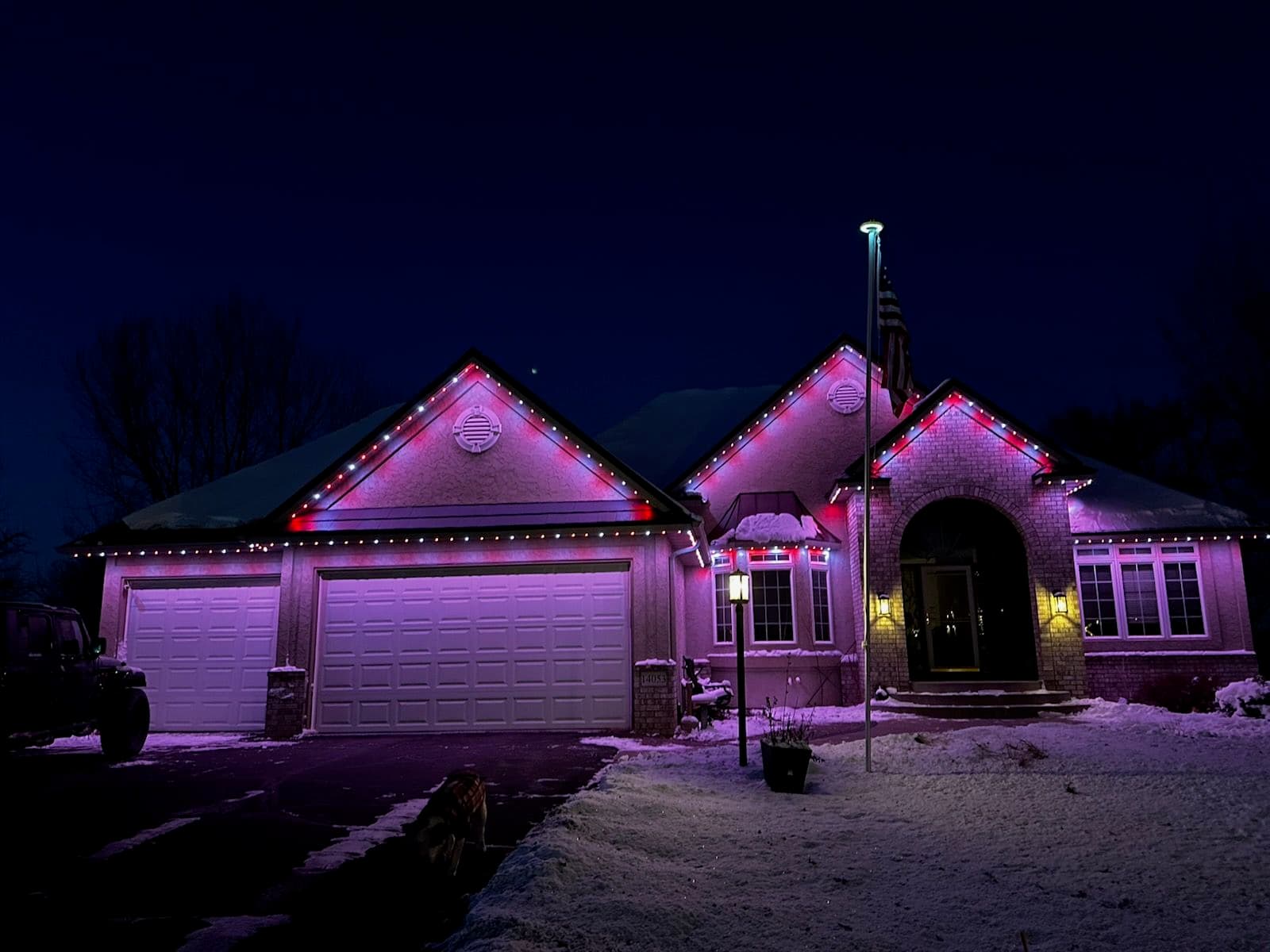
Permanent Architectural Lights vs Amazon DIY Kits: The Real Difference
On paper, the cheap DIY kits and Amazon smart strips look tempting. For a few hundred dollars, you can stick lights to your house and call it a day.
In reality, there are three big gaps between DIY strips and a true permanent architectural system:
Lifespan and reliability
Appearance from the street
Support when something breaks
If you want a clean, long-term solution that makes your home look better in 5 years than it does today, professional permanent lighting will almost always outperform DIY strips — especially in the Twin Cities.
Durability and Weatherproofing
This is where the gap shows up fastest. Most DIY strips and Amazon kits are designed for:
Shorter-term use
Limited UV exposure
Mild weather cycles
Now consider what Twin Cities weather actually does to your roofline:
Intense summer sun beating down for months
Freezing winters with sub-zero stretches
Ice, wind, freeze-thaw cycles, and driving rain
A consumer-grade strip light wasn't built for that. It was built for a backyard fence in San Diego.
Commercial-grade permanent systems, on the other hand, are built with:
UV-stable housings
Weather-sealed LED nodes
Proper sealants and penetrations
Wiring protected and hidden, not dangling
This is the difference between something that "looks okay this season" and something that still looks clean 10 Minnesota winters from now.
Appearance and Integration
This is the one most DIY buyers don't notice until the lights are already up.
DIY strips tend to:
Stick to the face of gutters or trim
Sag over time as adhesive fails
Expose wires, splices, and power supplies
Permanent architectural systems are designed to look like part of the home:
Color-matched aluminum track that hides the LEDs from daytime view
Straight, level runs that match your soffits and fascia
Finished end-cuts and hidden jump wires for a built-in look
From the street, people should see a beautifully lit home — not a lighting system stuck to the side of one.
Control, Warranty, and Support
With DIY kits:
You own the install, the troubleshooting, and every future repair
Warranty support is often limited and slow to claim — try calling for a replacement after 14 months and see what happens
If a section fails in February, you're the one on the ladder figuring it out
With a professional permanent system:
You get a lifetime-rated system with clear, honest warranty terms
A local company stands behind the product and the install
When something fails, there's a documented process and a crew to fix it — usually without you ever touching a ladder
You're not just buying lights. You're buying design, installation quality, and long-term support.
"But the Amazon Reviews Are Great…"
Fair point. A lot of DIY kits have legitimately good reviews — but here's what most reviewers can't tell you:
Most reviews are written within 30–90 days of install. That's before any real weather has hit the product. The honest test is the 2–3 year review, and those reviews usually tell a very different story.
Reviewers aren't installing in Minnesota. A 5-star kit in Texas can be a 1-star kit in Minneapolis. Cold-weather adhesive failure, freeze-thaw seal cracking, and snow-load damage rarely show up in warm-climate reviews.
Reviews don't capture appearance over time. A strip might light up fine on year 3, but it might also be sagging, yellowed, and showing exposed wire.
DIY kits aren't bad products — they're just designed for a different job than what your home needs in the Twin Cities.
Mini FAQ — DIY vs Pro
Q: Can I mix DIY lights and permanent lights? A: You can, but most homeowners who invest in permanent lighting remove the DIY strips. They look messy next to a clean architectural install — like wearing dress shoes with cargo shorts.
Q: Why are pro systems so much more expensive than DIY kits? A: You're paying for higher-grade materials, color-matched custom track, professional installation, safety practices, and long-term backing from a real local company — not just a box of parts. [See our full breakdown of permanent lighting cost in the Twin Cities →]
Q: Will people actually notice the difference? A: Yes. Most people can spot sagging strips and visible wires instantly, even if they can't articulate why a home looks "off." Clean, built-in systems look like part of the architecture — which is why nobody ever asks about them. They just notice the home looks great.
Q: What if I just want lights for one or two seasons and then I'm done? A: Then a DIY kit might honestly be the right answer for you. Permanent lighting is built for homeowners who want a long-term, year-round system. If you only want a one-time holiday display and don't care about year-round use, you don't need to spend pro-system money.
Get Your Free 10-Year Lighting Blueprint
If you've been comparing Amazon kits and pro systems and want to see what permanent lighting would actually look like — and cost — for your Twin Cities home, the next step is a free design consultation.
We'll come measure your actual roofline, talk through what you're trying to achieve, and put together a free 10-Year Lighting Blueprint specific to your home: a custom design, an exact quote, and a clear breakdown of long-term cost vs. DIY alternatives.
No pressure, no high-pressure sales — just real numbers and a plan.