How Long Do Permanent Outdoor Lights Last in the Twin Cities?
A properly installed permanent architectural lighting system should last decades, not seasons — many premium systems are rated for around 100,000 hours, or roughly 30 years of nightly use. But in the Twin Cities, real-world lifespan comes down to install quality, components, and how well the system handles freeze-thaw cycles. Here's what to actually expect, plus the simple maintenance you'll need.
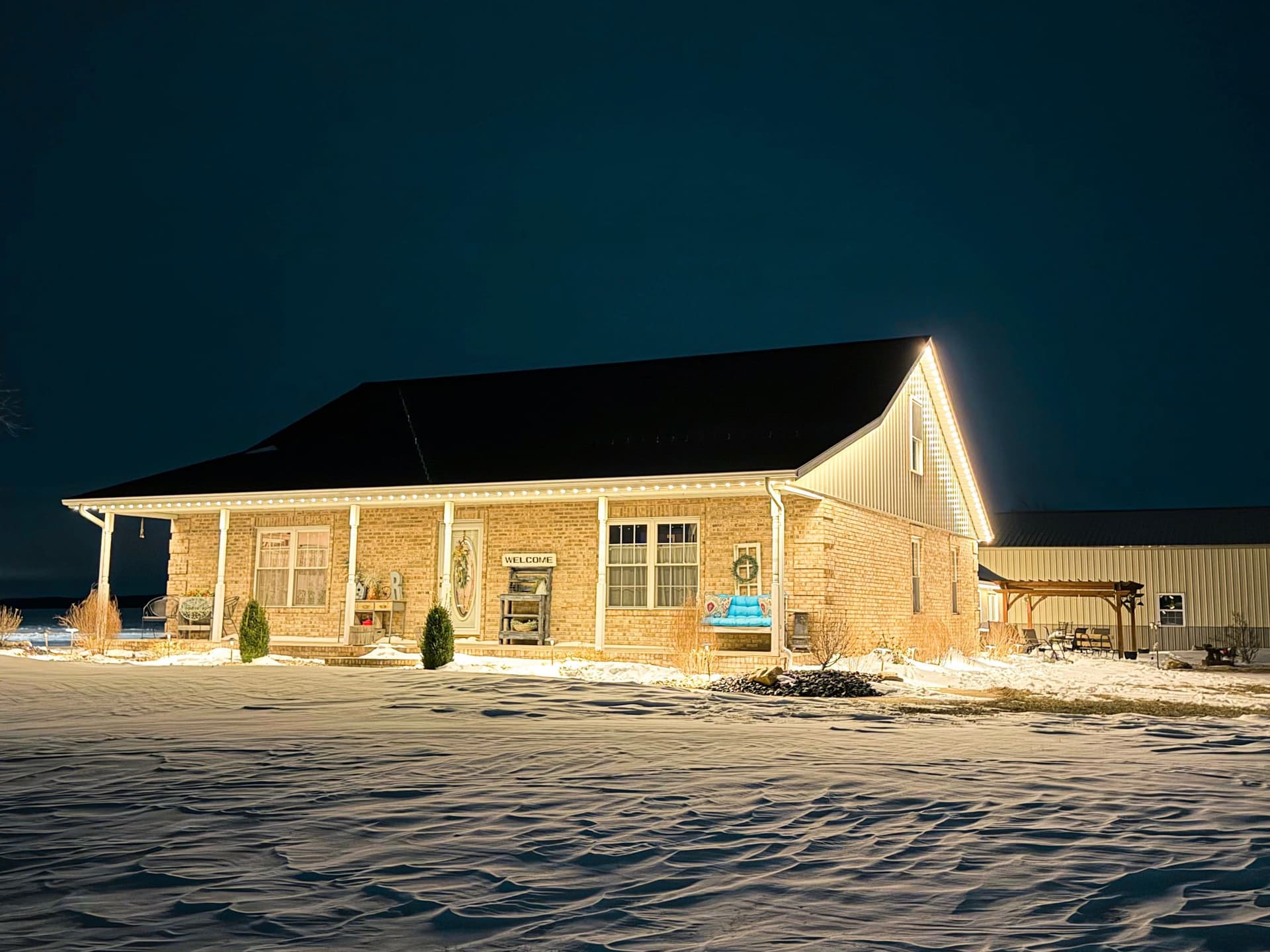
How Long Do Permanent Outdoor Lights Last in the Twin Cities?
A properly installed permanent architectural lighting system should last decades, not seasons.
Many premium systems are rated around 100,000 hours of LED runtime. At a few hours per night, that's roughly 30 to 35 years of use — longer than most people stay in the same home.
In the Twin Cities, the real question isn't "Will the lights last a few winters?" It's "Is this system designed to handle 30-plus freeze-thaw cycles, ice storms, and summer heat without becoming an eyesore?"
If you choose a commercial-grade system with professional installation, you should expect:
Very little day-to-day maintenance
Occasional cleaning and basic checkups
Fast, local support if something does go wrong
What "100,000 Hours" Actually Means
That number gets thrown around a lot, so let's be honest about what it represents.
Rated lifespan is measured at the LED component level under controlled lab conditions. Real-world lifespan depends on three things:
Component quality — LEDs, power supplies, controllers, and connectors
Protection from the elements — water sealing, UV resistance, physical damage
Installation technique — wire management, fastener quality, proper sealants
A 100,000-hour LED in a poorly installed system might fail in 4 years. The same LED in a properly installed system will outlast your roof.
The key idea: a serious permanent lighting system is not a one-season toy. It's an architectural upgrade — closer to adding a new exterior feature to your home than hanging holiday decor.
Typical Maintenance for Permanent Lighting
Most Twin Cities homeowners will only need to do or schedule:
Periodic visual checks from the ground to confirm everything looks aligned and intact
Occasional cleaning of dirt, dust, cobwebs, and insects from the track or lens areas
Software or app updates when new firmware is available
A professional checkup if a section looks off-color, dim, or unresponsive
That's it. No annual install. No takedown. No tangled strands in your basement. No ladder time for you.
For homeowners who want even less to think about, a protection plan is worth considering. A good plan should include:
Annual system checkup and cleaning
Priority scheduling for service calls
Coverage for common issues like storm damage, animal interference, or damage from other trades working on your home
Discounts on future add-ons (back of home, garage, landscape lighting)
Think of it like an HVAC service contract — small annual cost in exchange for keeping the system running cleanly without you having to think about it.
What Can Shorten Lifespan?
A permanent lighting system can fail early if it's installed wrong or built with cheap components. The most common failure points:
Poor sealing around penetrations — water gets in, components corrode
Pinched or exposed wires — daily expansion and contraction stress the wiring
Cheap components — bargain LEDs and power supplies fail years before commercial-grade ones
Unprotected jump wires and connections — small details that take a system from "10 years" to "30+ years"
This is why professional installation standards, crew training, and quality control matter as much as the product itself. A premium system installed badly will fail. A premium system installed correctly will outlast most of the things on your house. [See the full breakdown of why DIY kits and pro systems aren't the same product →]
"What If My Lighting Company Goes Out of Business?"
This is the unspoken question behind every "lifetime warranty" claim, and it's a fair one. Here's the honest answer:
A good permanent lighting system is built on standardized, replaceable components — not proprietary parts that only one company can service. Even if your installer disappears tomorrow, another qualified electrician or lighting company can:
Diagnose the system using standard tools
Replace failed LEDs, power supplies, or controllers with industry-standard parts
Continue using your existing track and wiring
That's a key reason to ask any installer — including us — what components they use, whether the parts are industry-standard, and whether the system can be serviced by another qualified contractor if needed.
A locally owned company that's planning to be around for decades is the best-case scenario. But a properly designed system shouldn't depend on one company's existence to keep working.
Mini FAQ — Lifespan & Maintenance
Q: Will permanent lights damage my roof or gutters over time? A: Done correctly, the system integrates with your fascia or soffit without compromising your roof. Proper sealing, fastening, and penetration protection are part of a professional install — and the difference between a clean install and a damaging one comes down to crew training and standards.
Q: What if a section of lights goes out? A: A trained technician can isolate the issue, replace the affected component, and restore the system — usually in a single visit. Good documentation and component standardization make this process fast and clean.
Q: Do I need to take the system down in winter? A: No. That's the whole point. Permanent lighting stays up year-round and is built specifically to handle local weather. Taking it down would defeat the purpose — and the system is designed to look just as good in February as it does in July.
Q: How often should I expect to need a service call? A: For a properly installed commercial-grade system, most homeowners go years between service calls. The most common reasons we get called out are storm damage, animal damage (squirrels and woodpeckers occasionally), or other trades — like roofers or painters — accidentally disturbing the system during their work.
Q: Will the lights look as bright in 10 years as they do today? A: Quality LEDs dim very slowly — often less than 10% over a decade of regular use. Most homeowners can't visibly notice the difference year-over-year. The biggest factor in long-term appearance isn't actually brightness — it's keeping the track clean and the wiring intact.
Get Your Free 10-Year Lighting Blueprint
If you want to know exactly how long permanent lighting would last on your Twin Cities home — including the components we'd use, the install standards we follow, and the long-term maintenance plan — the next step is a free design consultation.
We'll come measure your actual roofline, walk you through the system in person, and put together a free 10-Year Lighting Blueprint specific to your home: a custom design, an exact quote, and a clear breakdown of what to expect from the system over the next decade and beyond.
No pressure, no high-pressure sales — just real numbers and a plan.
[Get Your Free 10-Year Lighting Blueprint →]